Health by Design collaborates across sectors and disciplines to ensure communities in Indiana and beyond have neighborhoods, public spaces, and infrastructure that promote healthy, active living.
Health by Design is invested in four core program areas: walking, biking, transit and land use. Our strategic goals are to:
Embed health equity in Health by Design’s systems, practices, policies, and activities
Strengthen the effectiveness, efficiency, and sustainability of Health by Design
Increase equitable, safe, accessible, convenient and connected options for walking, biking and public transit
Encourage responsible land use
Expand Healthy Communities efforts to include upstream strategies that address complex system change
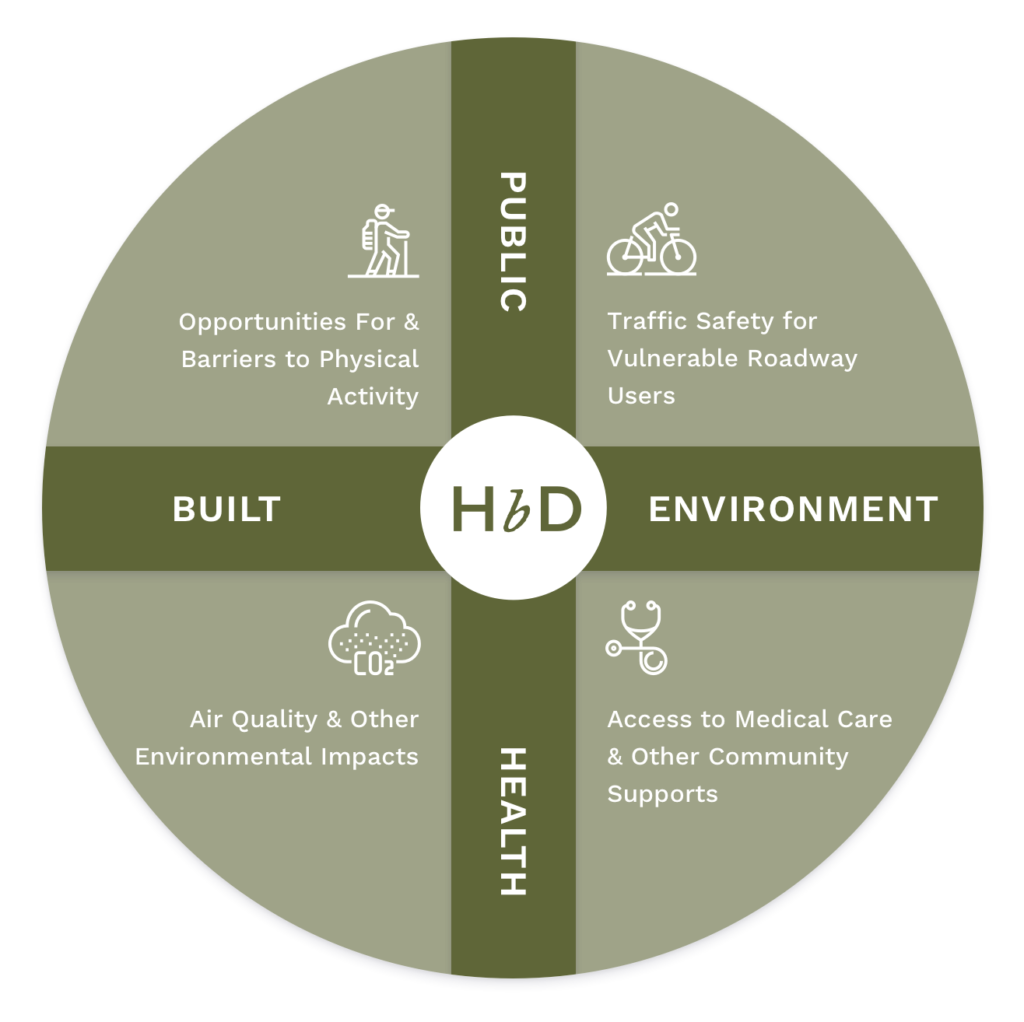
The built environment, consisting of transportation systems and land use patterns, has both direct and indirect impacts on public health.
By advocating for and implementing policy, systems and environmental change strategies that address the built environment, Health by Design strives to impact individual, population and community health.
Health by Design board members, staff and partners invite you to get involved! Everyone has a role to play, personally and/or professionally, in achieving vibrant, thriving communities that help all people live active, healthier lives.
Walk or bike an errand when possible
Keep your sidewalk clean and clear
Attend a partner meeting
Make a donation to support our work
Organize a neighborhood walk audit
Sign-up for our e-newsletter
Volunteer for a committee
Contact your elected officials about funding priorities
Partners
The Health by Design coalition consists of more than 300 organizations and 3,000 individuals representing various sectors and disciplines across Indiana and beyond. Our success is directly attributable to the strong partnerships that have been cultivated and nurtured for more than a decade. Together we have achieved countless planning, policy and project successes that help to ensure safe, accessible and connected transportation networks for all Hoosiers, regardless of age, ability or income. To learn more about Health by Design, partnership opportunities and getting involved, email info@hbdin.org.